Ramp Up Every Student to Grade-level Math
On-Ramp Math is a grades 6–12 supplemental math program designed to address unfinished learning by providing targeted, just-in-time support to strengthen essential prerequisite math skills. Through personalized skill pathways, guided instructional supports, and clear insight for teachers, On-Ramp Math makes every student ready and able to participate in grade-level math instruction.

Turn stuck moments into “I got this!”
Fuel confidence with the right skills at the right time
Clarity for teachers, confidence for students

WHY WE BUILT ON-RAMP MATH
The Need for Real, Relevant Math Readiness
Students often struggle not because they lack ability, but because they are missing a few essential prerequisite skills needed for grade-level math. Traditional math intervention strategies over-remediate or mask the root cause of struggle, limiting access to grade-level instruction.
On-Ramp Math was designed to strengthen those exact skills and address unfinished learning in math through just-in-time support and precise instruction. A brief diagnostic identifies the exact, prerequisite skills each student needs and creates a personalized math pathway aligned directly to grade-level expectations.
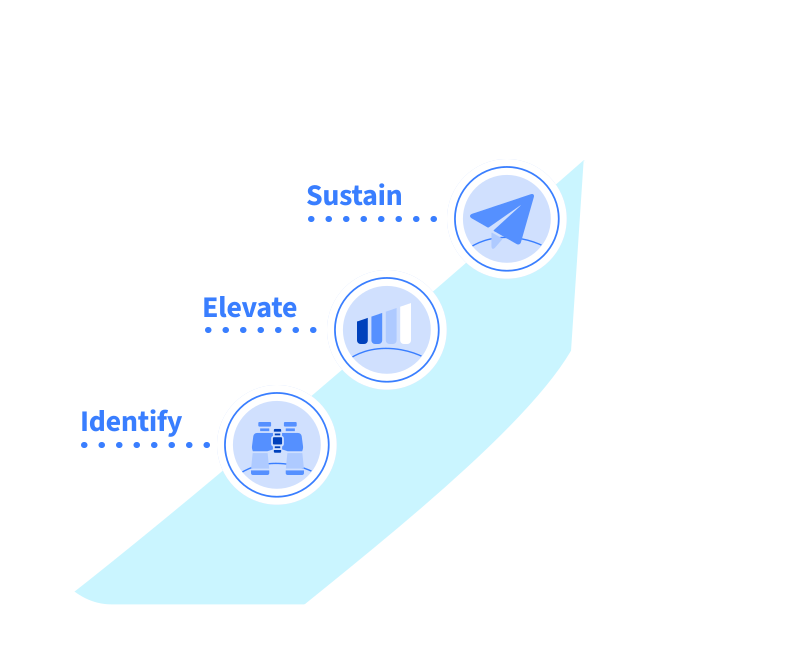
Through a simple three-part model: Identify essential skills a student needs, Elevate them through guided instruction, and Sustain readiness over time, On-Ramp Math helps students build the skills they need to be successful in grade-level math without overwhelming teachers or disrupting instruction.

Inside On-Ramp Math
Strengthen Math Readiness for Every Learner

Click Image to Enlarge
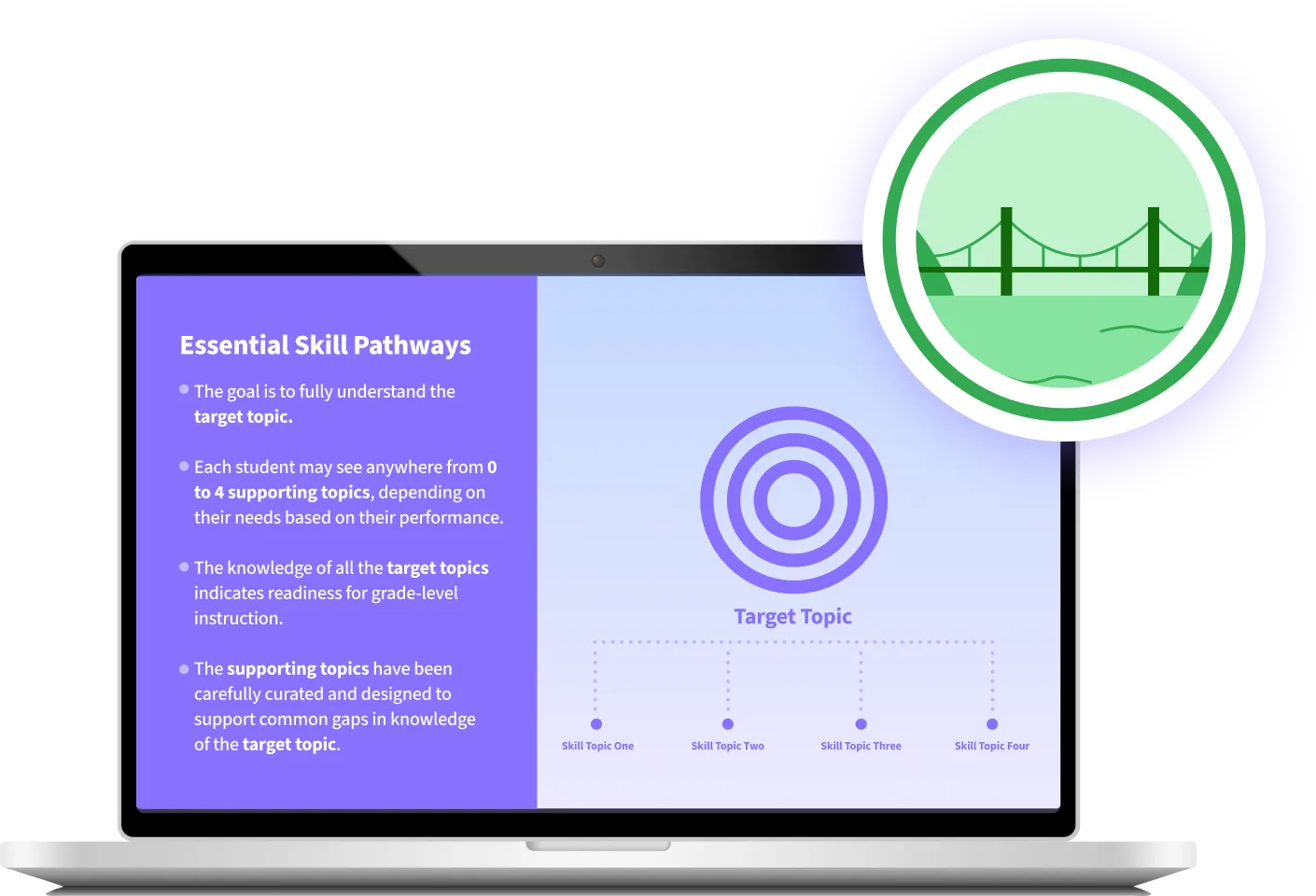
Essential Skill Pathways
On-Ramp Math identifies the essential math skills students need for success in their current course. Learning is broken into Target Skills and Supporting Skills, ensuring students focus only on what they truly need for grade-level readiness, not unrelated remediation.
Click Image to Enlarge
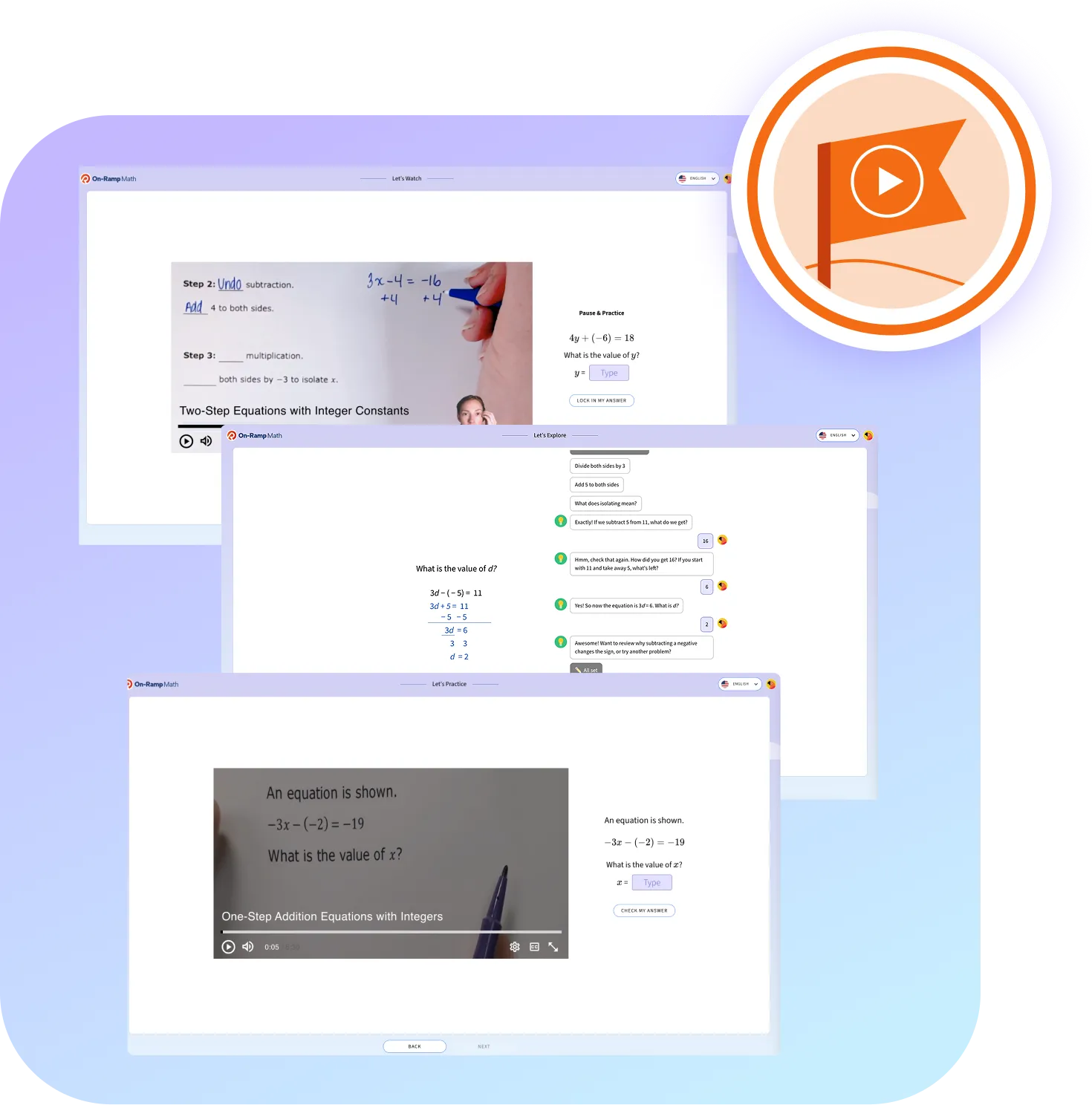
Guided Instructional Cycle
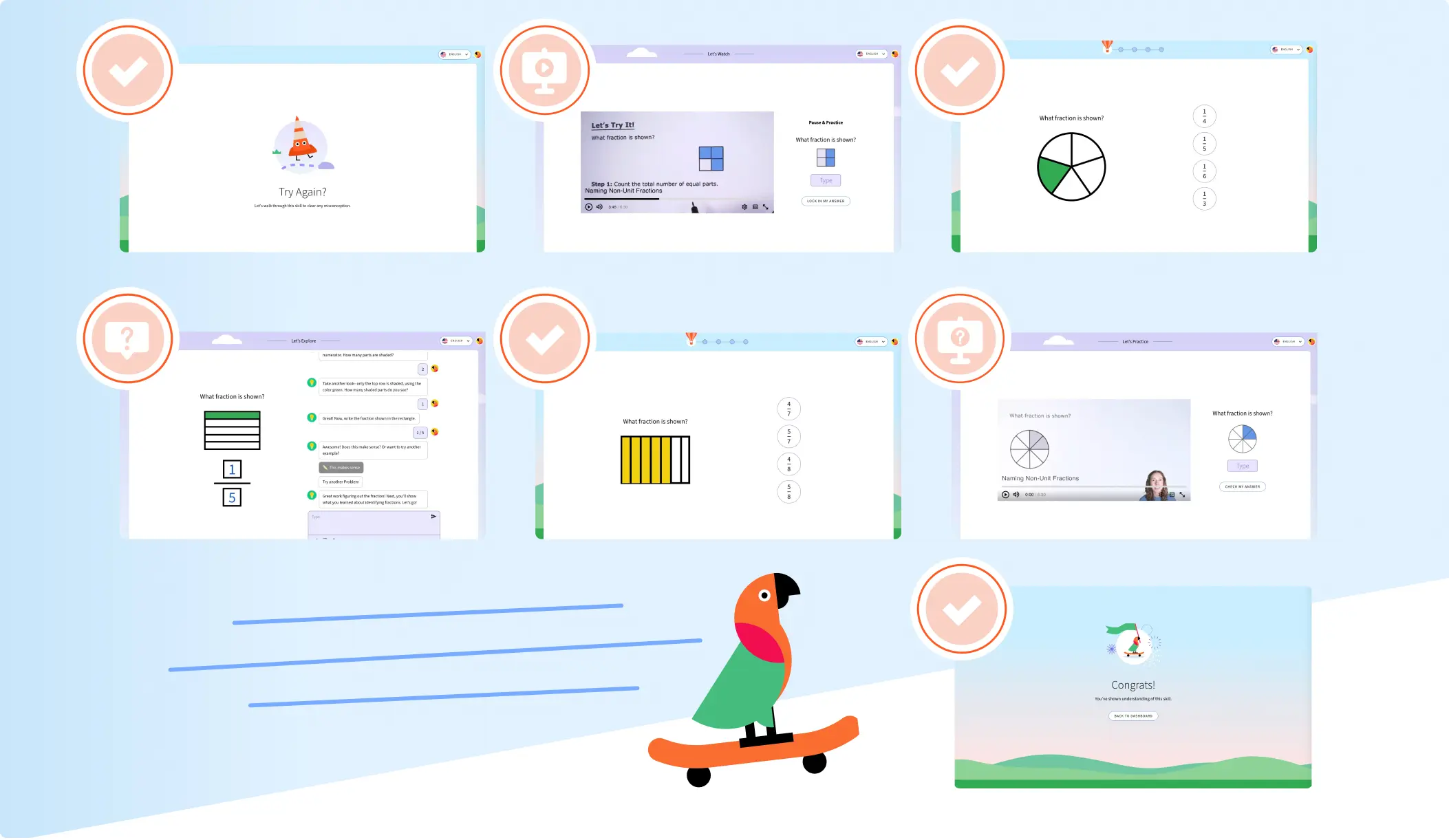
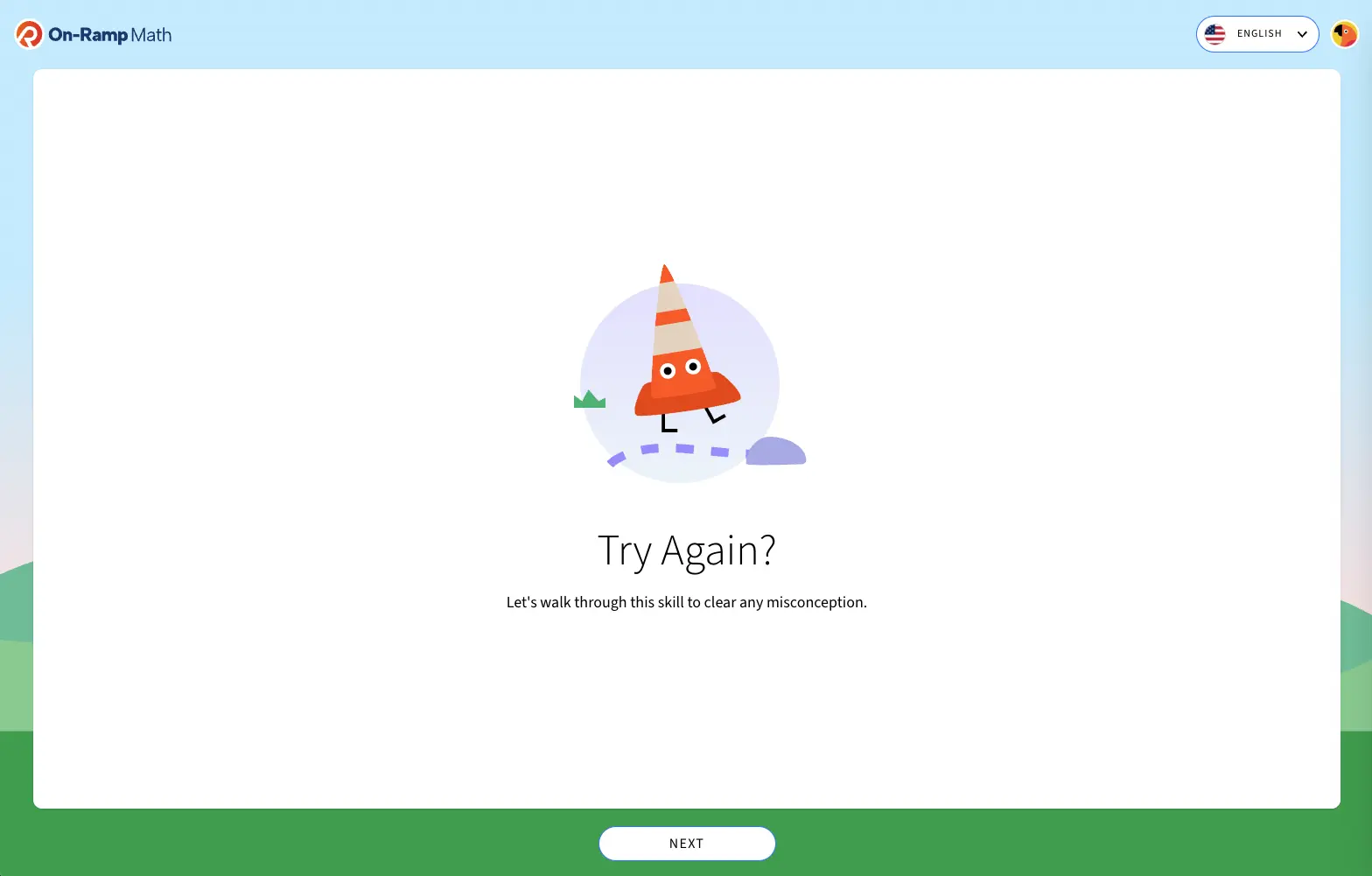
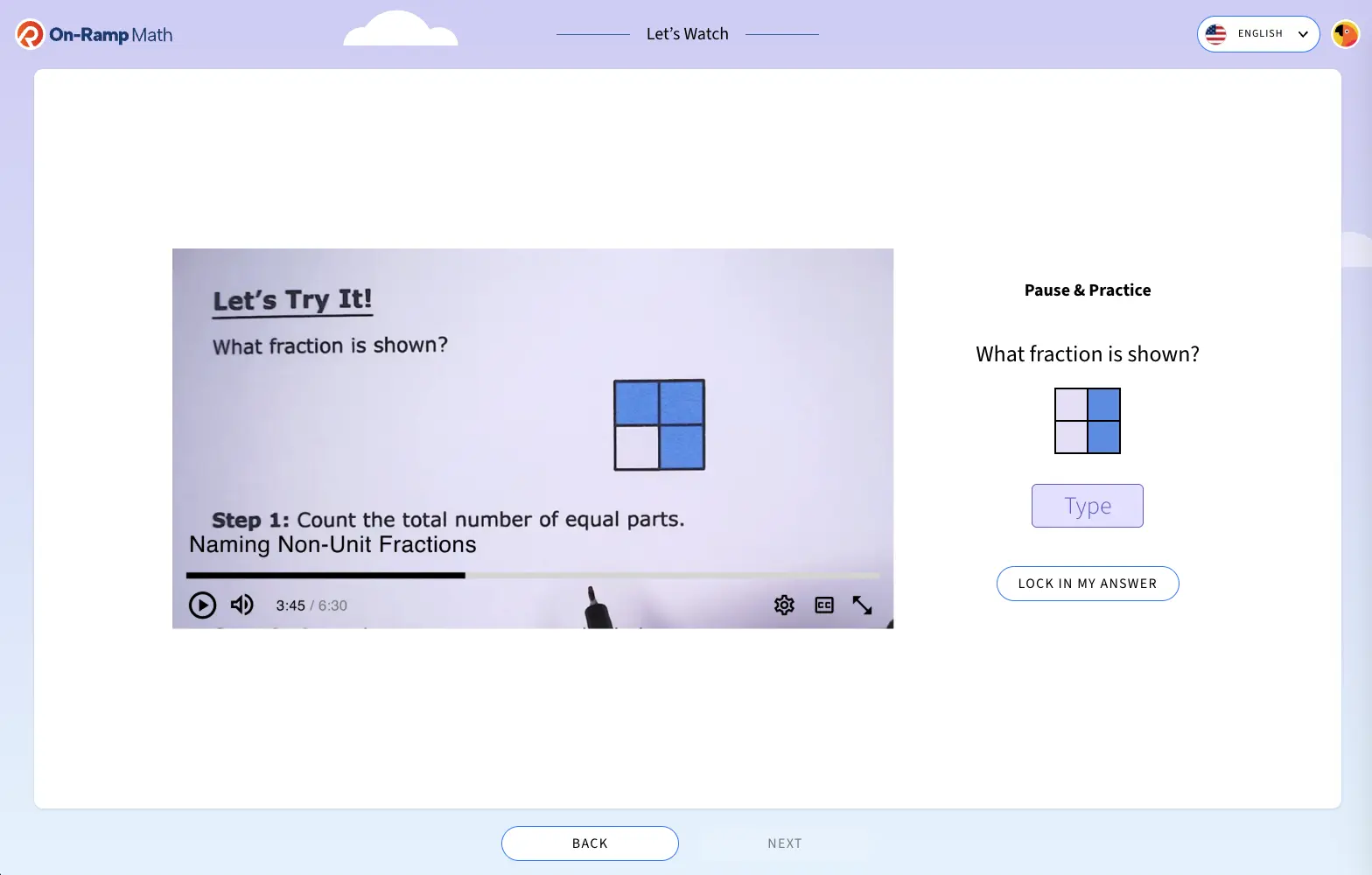
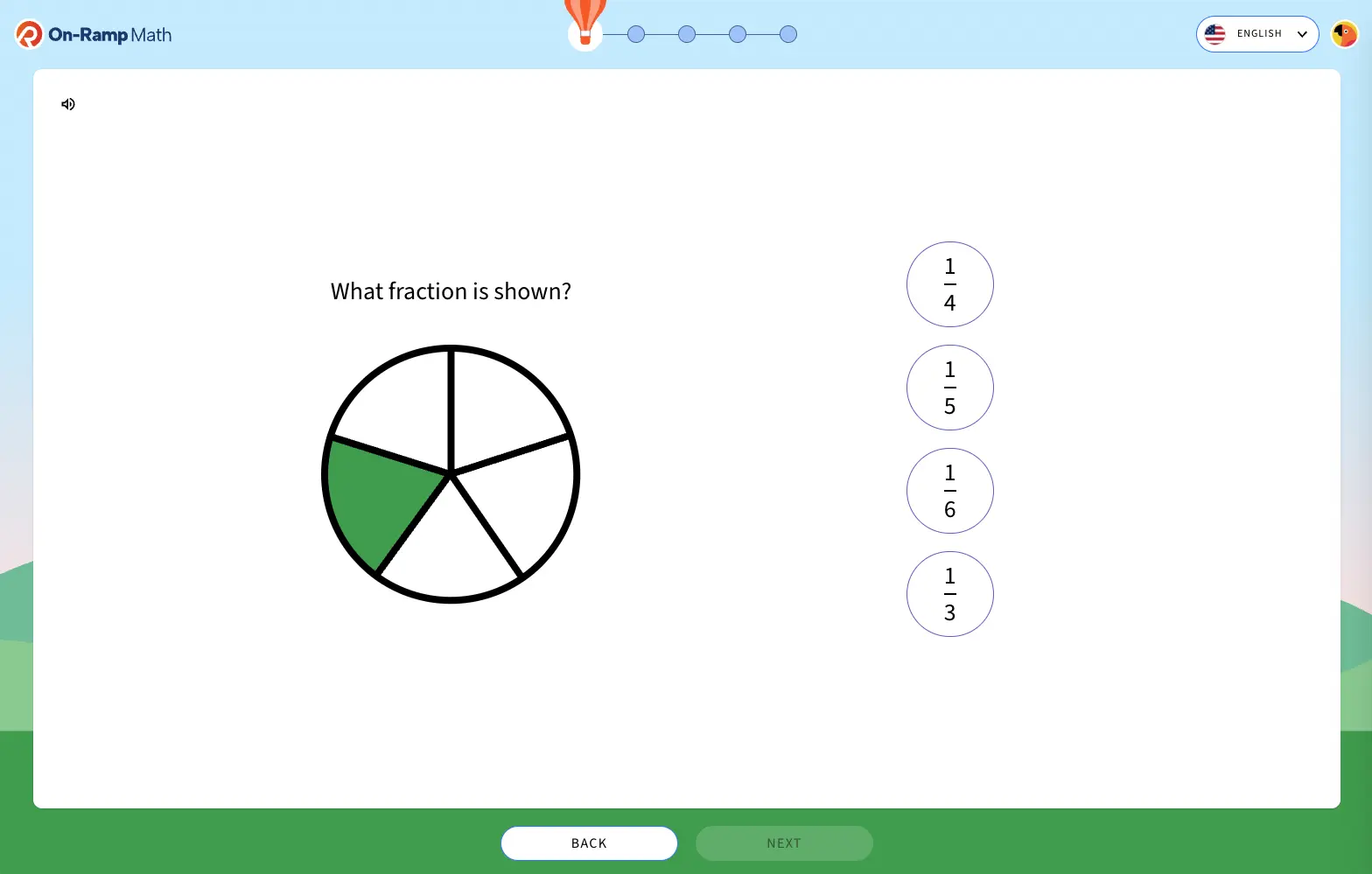
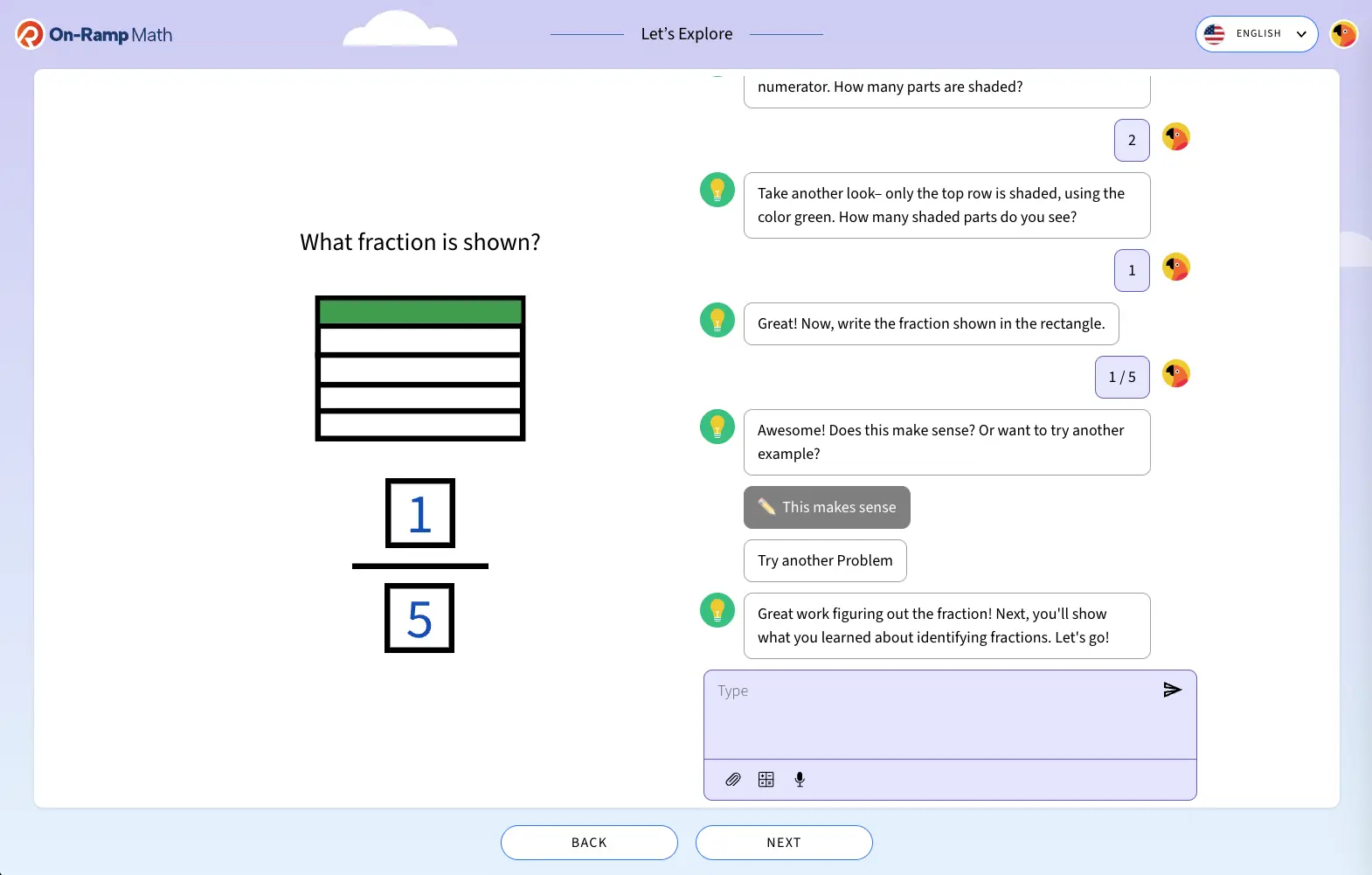
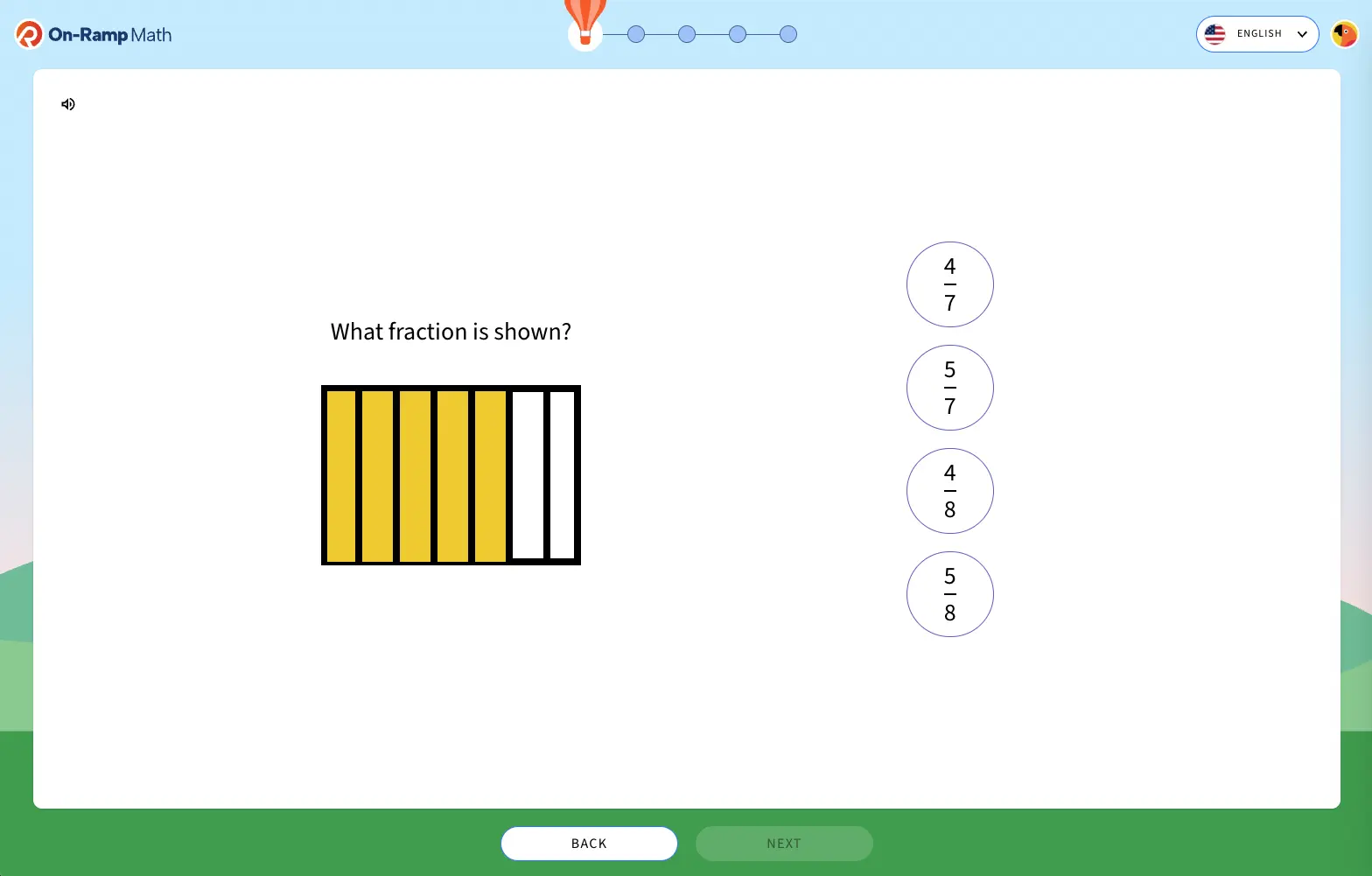
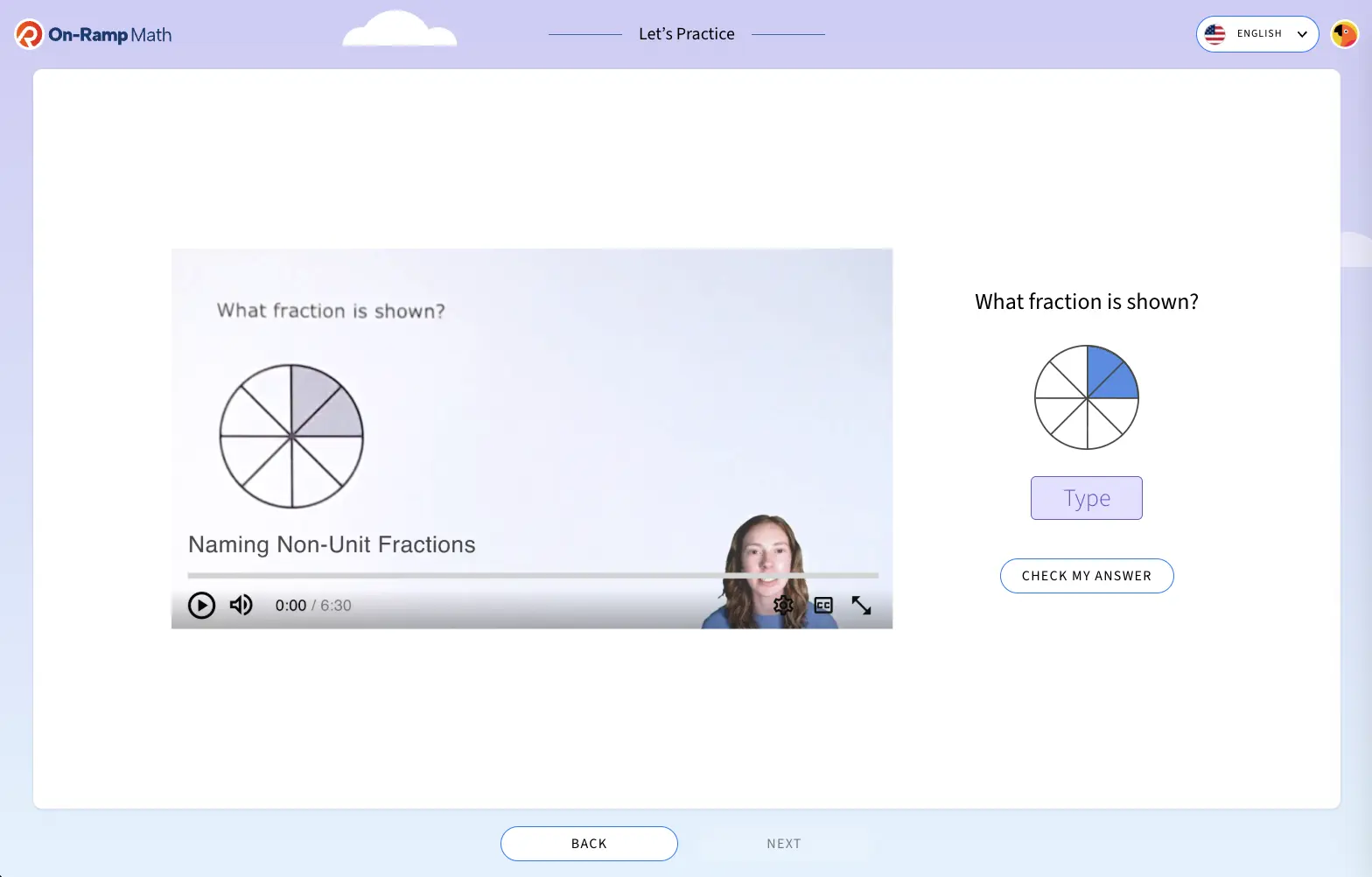
Students receive targeted, guided math instruction through a consistent instructional cycle. Quick Concept Checks (“Pit Stops”) verify readiness, while instructional videos, guided exploration, and targeted practice adjust automatically based on student need.
Click Image to Enlarge
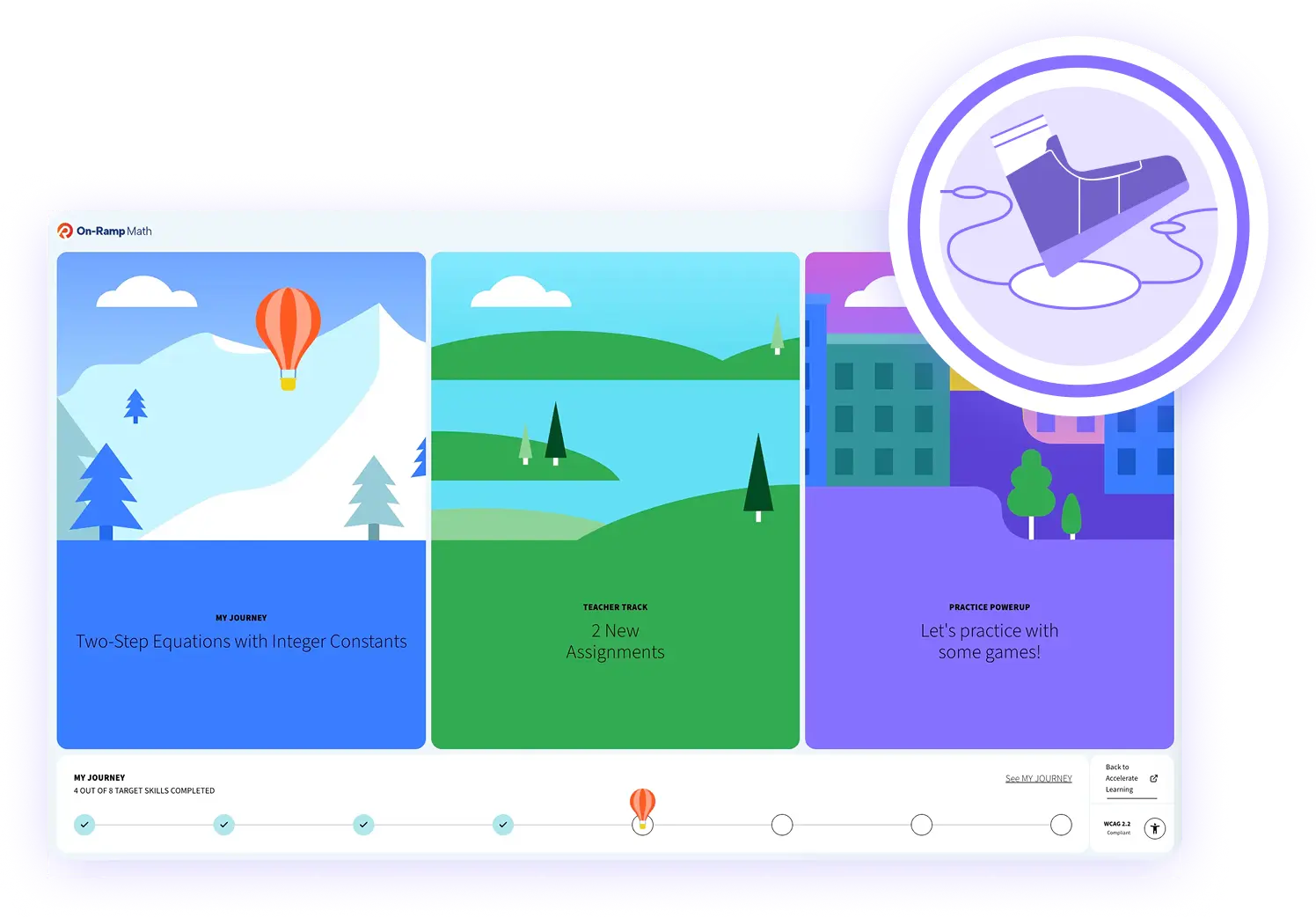
My Journey:
Personalized Student Pathway
The My Journey track provides personalized math pathways built from diagnostic data, guiding students through the exact Target and Supporting Skills they need to participate successfully in grade-level math instruction.
Click Image to Enlarge
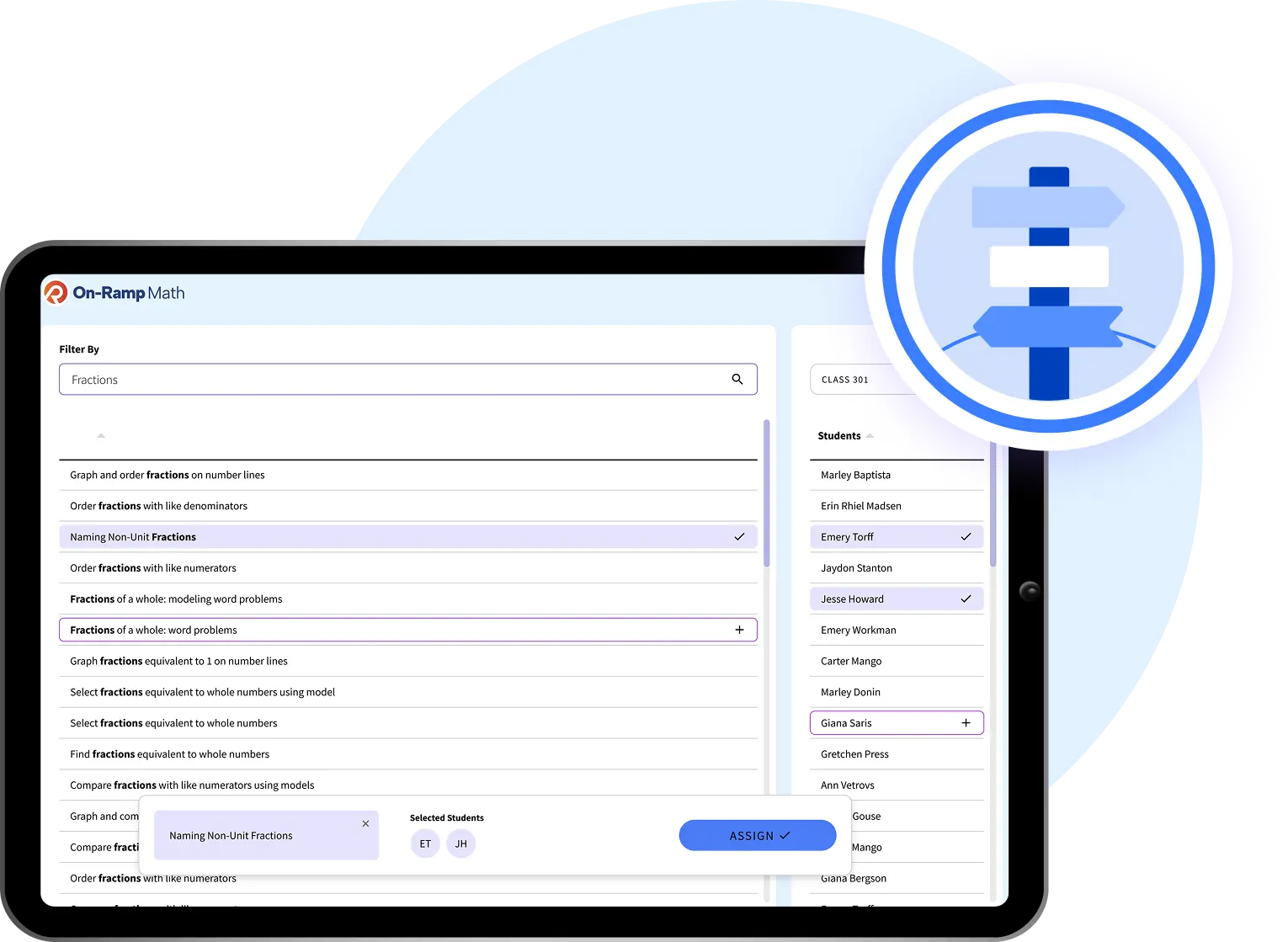
Teacher Track:
Teacher-Led Support
Teacher Track allows educators to assign specific skills to individuals, groups, or the whole class, supporting intervention, acceleration, and core instruction, while giving teachers meaningful control without additional planning or grading.
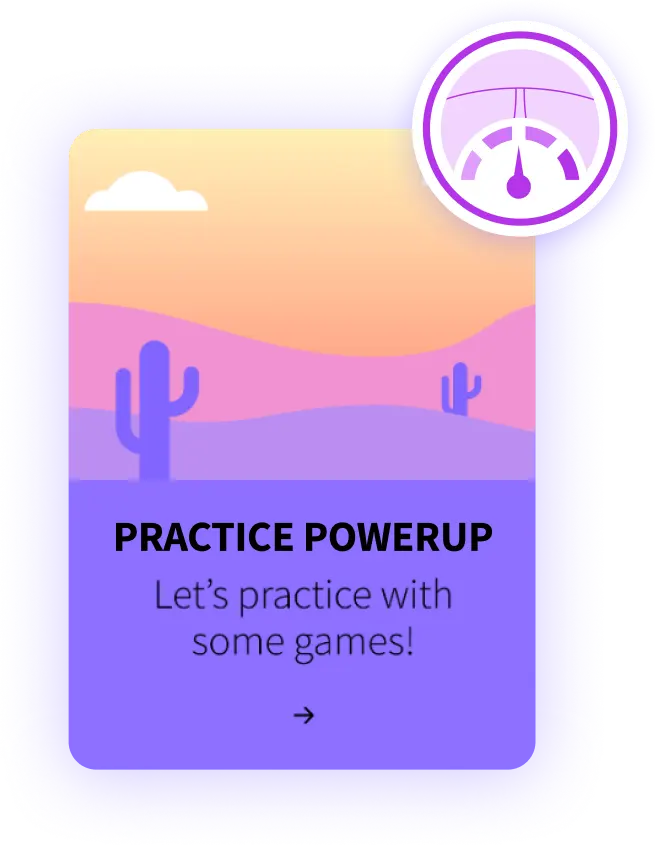
Practice PowerUp:
Fluency Reinforcement
The Practice PowerUp (coming soon!) track brings fluency to life and reinforces foundational math skills through engaging, game-based interactive practice that builds confidence and supports long-term readiness across grade levels.
Click Image to Enlarge
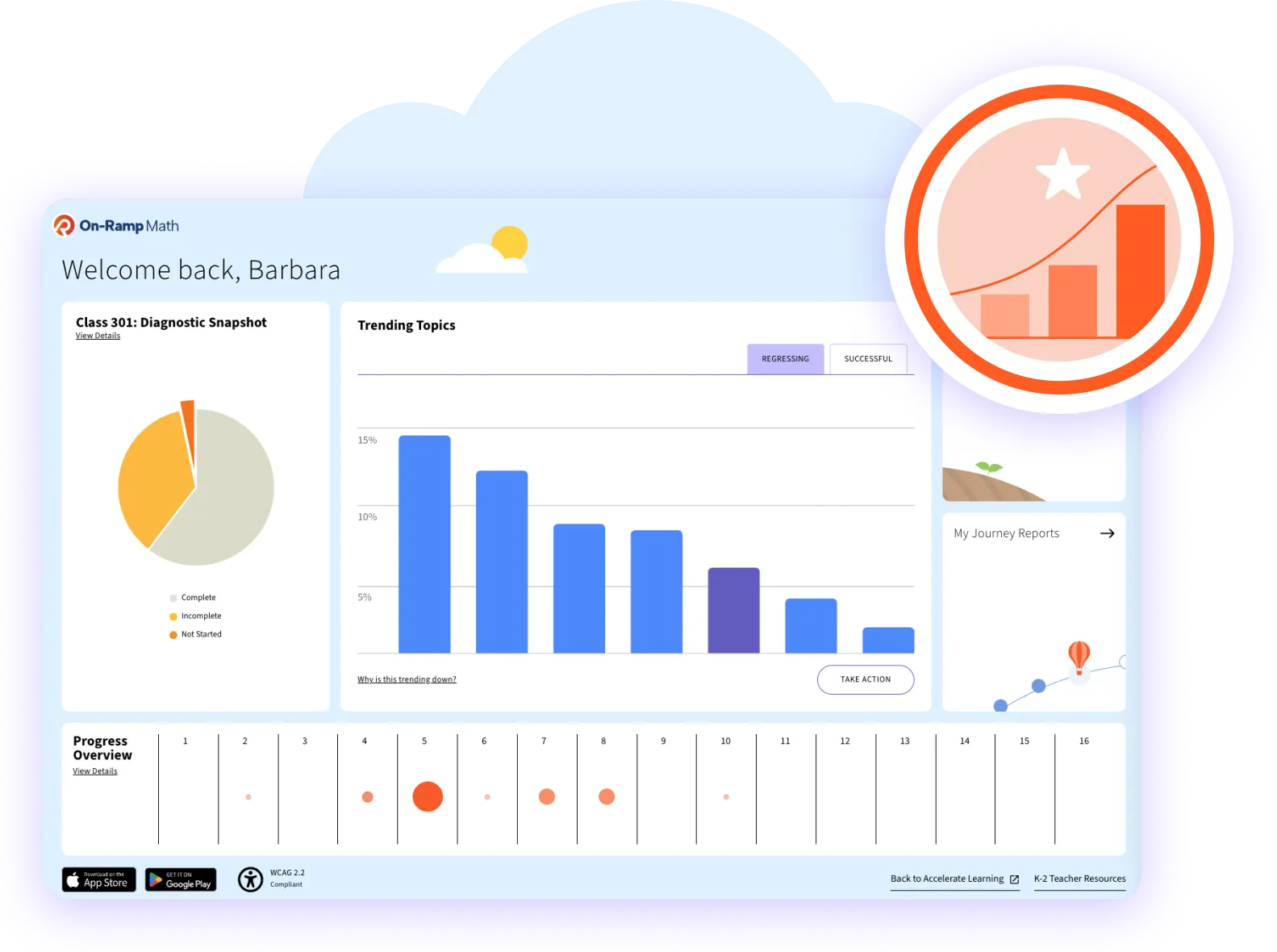
Clear Dashboards and Insight
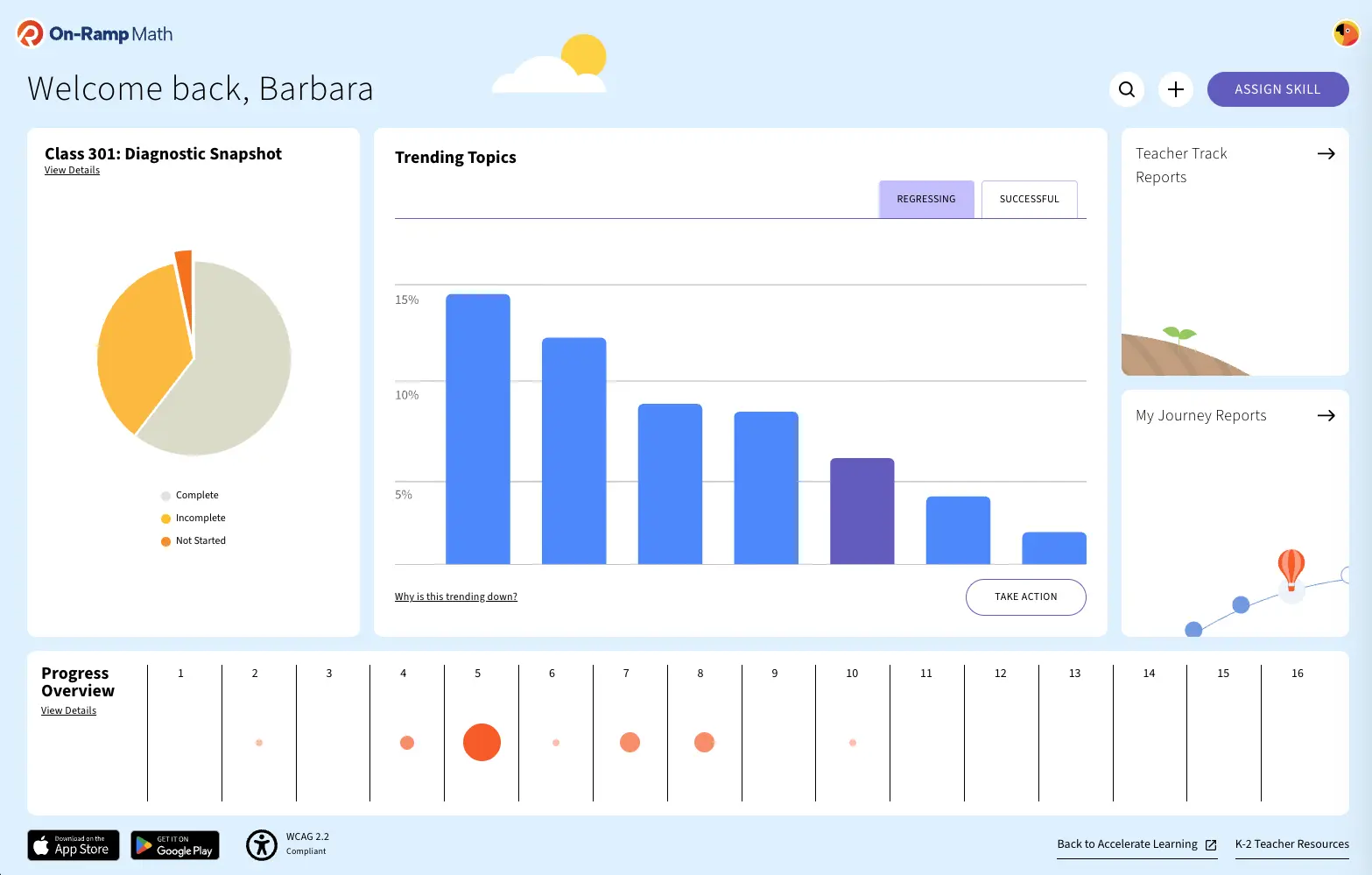
Simple reporting dashboards provide actionable math data, showing skill readiness, gaps, and progress at a glance, so teachers can make confident instructional decisions quickly.
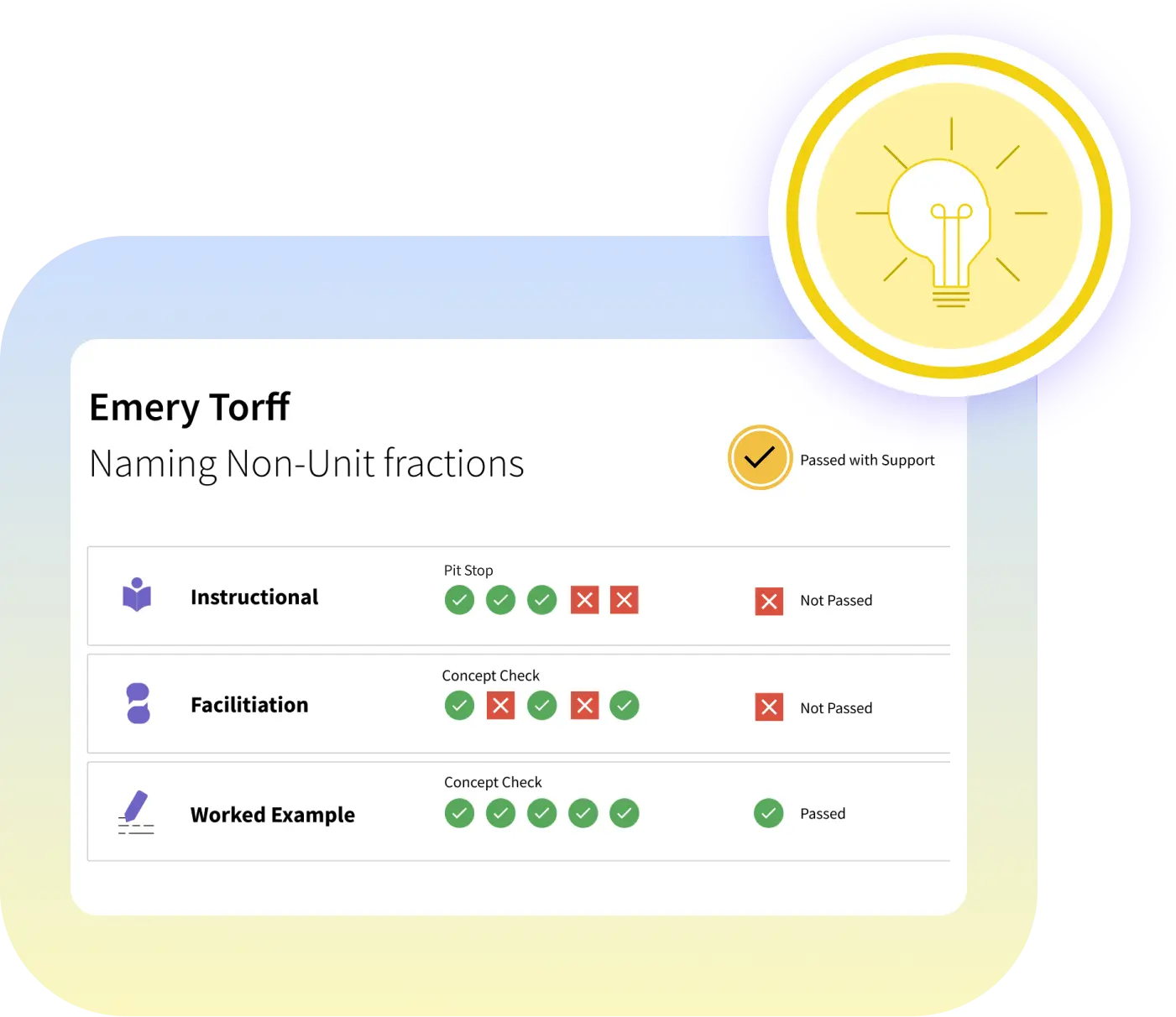
Click Image to Enlarge
Actionable Academic Intelligence
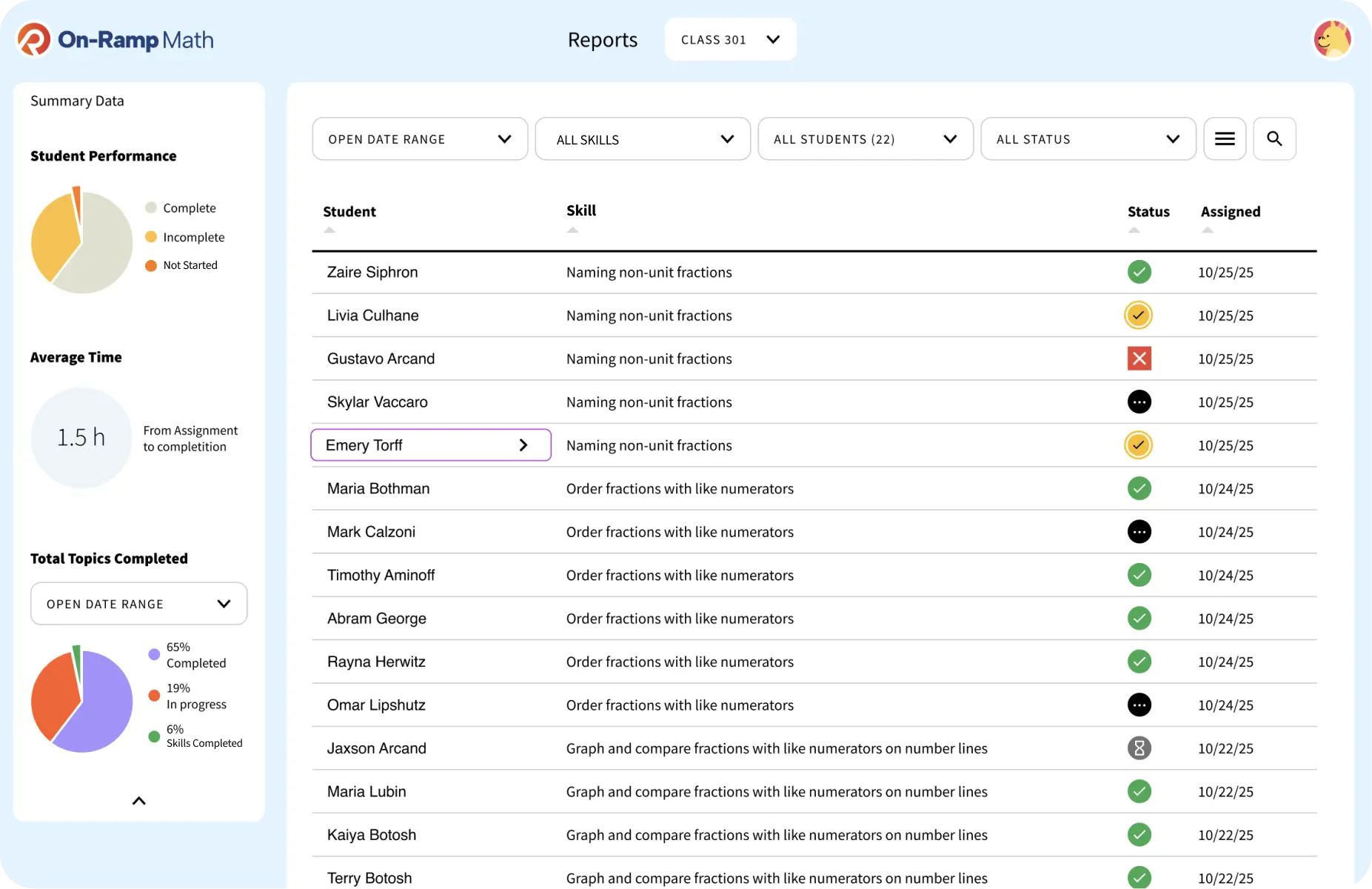
Academic Intelligence reveals where students are struggling and why, highlighting patterns and misunderstandings so teachers can target support quickly and keep the whole class moving forward.
ESSENTIAL SKILLS PATHWAYS
Pinpoint the Skills Students Need to Succeed at Grade Level
On-Ramp Math begins by determining the essential prerequisite math skills a student needs for success in their enrolled course. This ensures that every skill a student practices contributes directly to grade-level math readiness.
Using a brief diagnostic, students are placed into a personalized pathway, My Journey, focused only on the Target Skills they have not yet learned. Skills already demonstrated are removed, creating a precise roadmap that avoids unnecessary remediation, accelerates progress toward grade-level instruction, and builds readiness and confidence along the way.

Target Skills
Target Skills are the identified primary skills students must learn to demonstrate grade-level readiness.
Target Skills are:
- The core learning objective
- The skills students must strengthen to be ready for grade-level instruction
- Explicitly taught and supported in the instructional cycle
- What the system measures to indicate the degree of readiness a student is
Why this matters:
Target Skills ensure clarity. Teachers know exactly what a student is working toward, and students know exactly what success looks like.
Examples:
- Middle School: Evaluating expressions with exponents
- High School: Graphing linear equations in slope-intercept form

Supporting Skills
Supporting Skills are the micro-skills students need in place before they can confidently tackle the Target Skill.
Supporting Skills provide:
- The “building blocks” that prevent students from getting stuck
- Bite-sized skill reinforcement
- Context for why the Target Skill matters
- A smooth ramp toward understanding the Target Skill
Why this matters:
Instead of guessing why a student can’t perform a skill, On-Ramp Math reveals exactly which micro-skill is missing and addresses it inside the instructional cycle.
Examples:
If a Target Skill is “Compare fractions with unlike denominators,” Supporting Skills might include:
- Understanding unit fractions
- Recognizing equivalent fractions
- Comparing fractions with like denominators

GUIDED INSTRUCTIONAL CYCLE
Targeted Instruction That Adapts to Student Readiness




FLEXIBLE MATH SUPPORT
A Solution Designed for Every Student’s Path
Whether students need personalized skill support, teacher-directed guidance, or foundational fluency reinforcement, On-Ramp Math provides flexible pathways that strengthen readiness for grade-level math.

My Journey
Personalized Pathway for Readiness
My Journey adapts to each student’s skill readiness, guiding them through the exact Target and Supporting skills they need to successfully and confidently participate in grade-level instruction.
- Adaptive instructional cycle guided by the initial diagnostic and the Target Skill Pit Stops.
- Instructional videos and guided prompts that support understanding
- Targeted skill reinforcement through Supporting Skills

Teacher Track
Teacher-led Skill Assignment
Teacher Track allows educators to assign specific skills to individuals, groups, or the entire class to reinforce skills or prepare students for upcoming lessons.
- Assign any skill on demand
- Uses the same guided cycle as My Journey
- Supports intervention, acceleration, and core instruction
- Includes access to ALL the topics in the entire program

Practice PowerUp
Fun, Game-Based Fluency Practice
Practice PowerUp strengthens foundational fluency through engaging, game-based activities that support readiness across grade levels.
(coming soon!)
- Strengthens numeracy foundations
- Motivating, student-friendly design
- Supports long-term skill retention

dashboards and insight
Know Where Students Are and What to Do Next
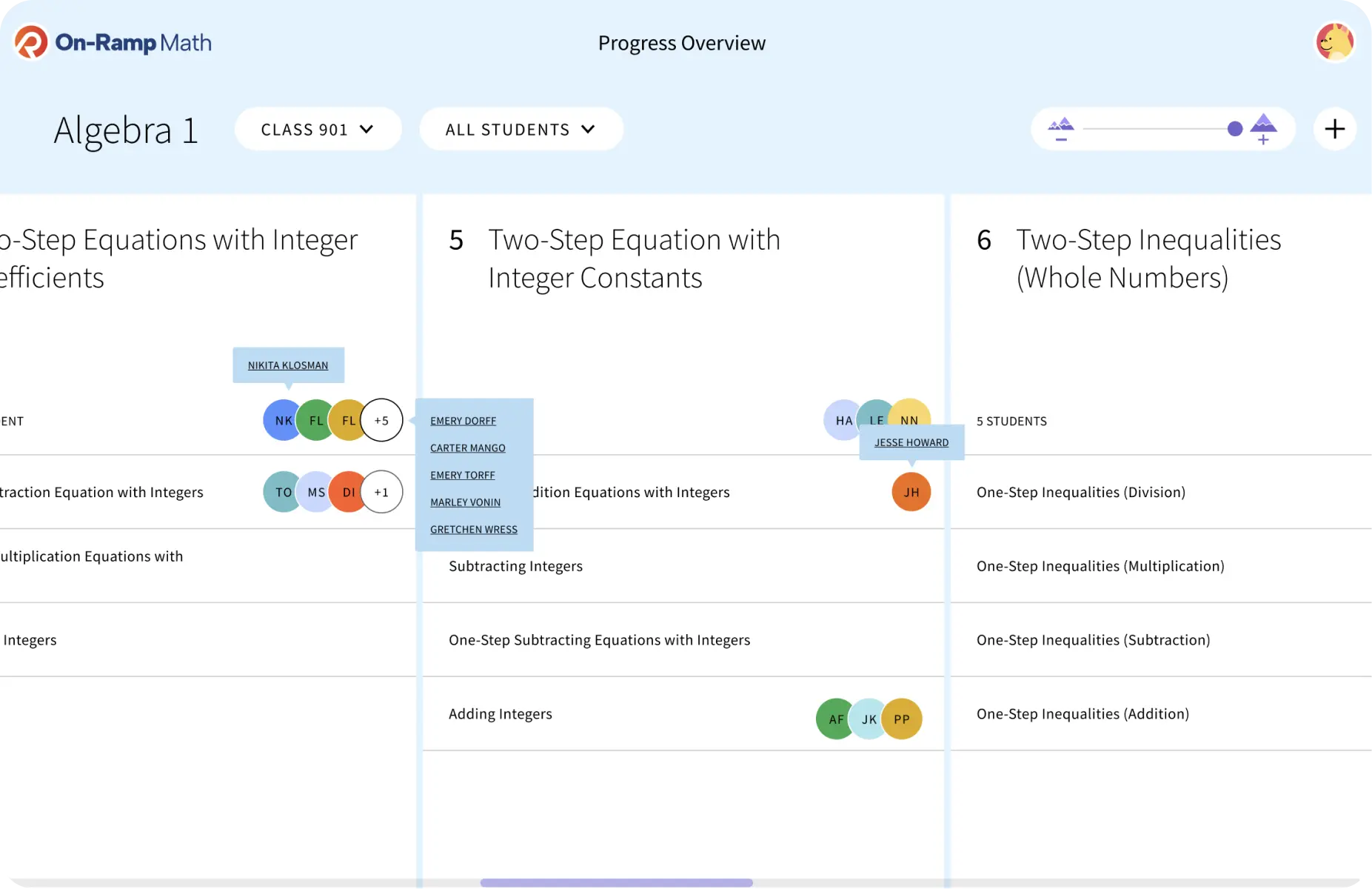
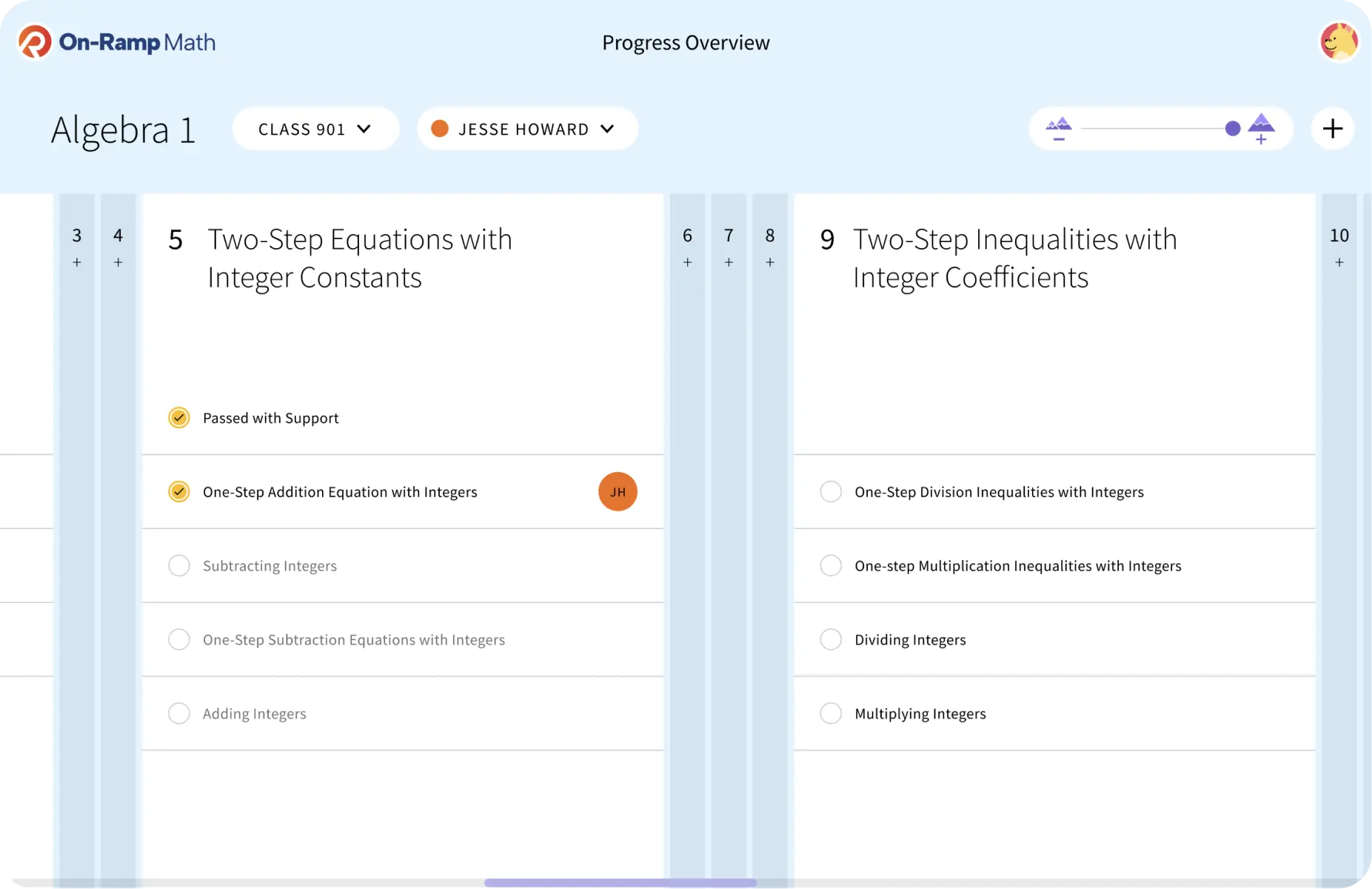
Clear dashboards show how students are progressing through essential skills, giving teachers real-time insight to efficiently plan instruction, target support, and accelerate progress toward grade-level learning.
Clear Dashboards and Insight
Dashboards clearly show which skills students were assigned based on the diagnostic assessment and how they are progressing through each instructional cycle. Teachers gain real-time visibility into student readiness, progress, and areas of need, making it easier to plan instruction, adjust support, and respond quickly with targeted next steps. This clear, skill-level insight helps teachers act with clarity and confidence, without sorting through overwhelming or disconnected data.
Click Image to Enlarge
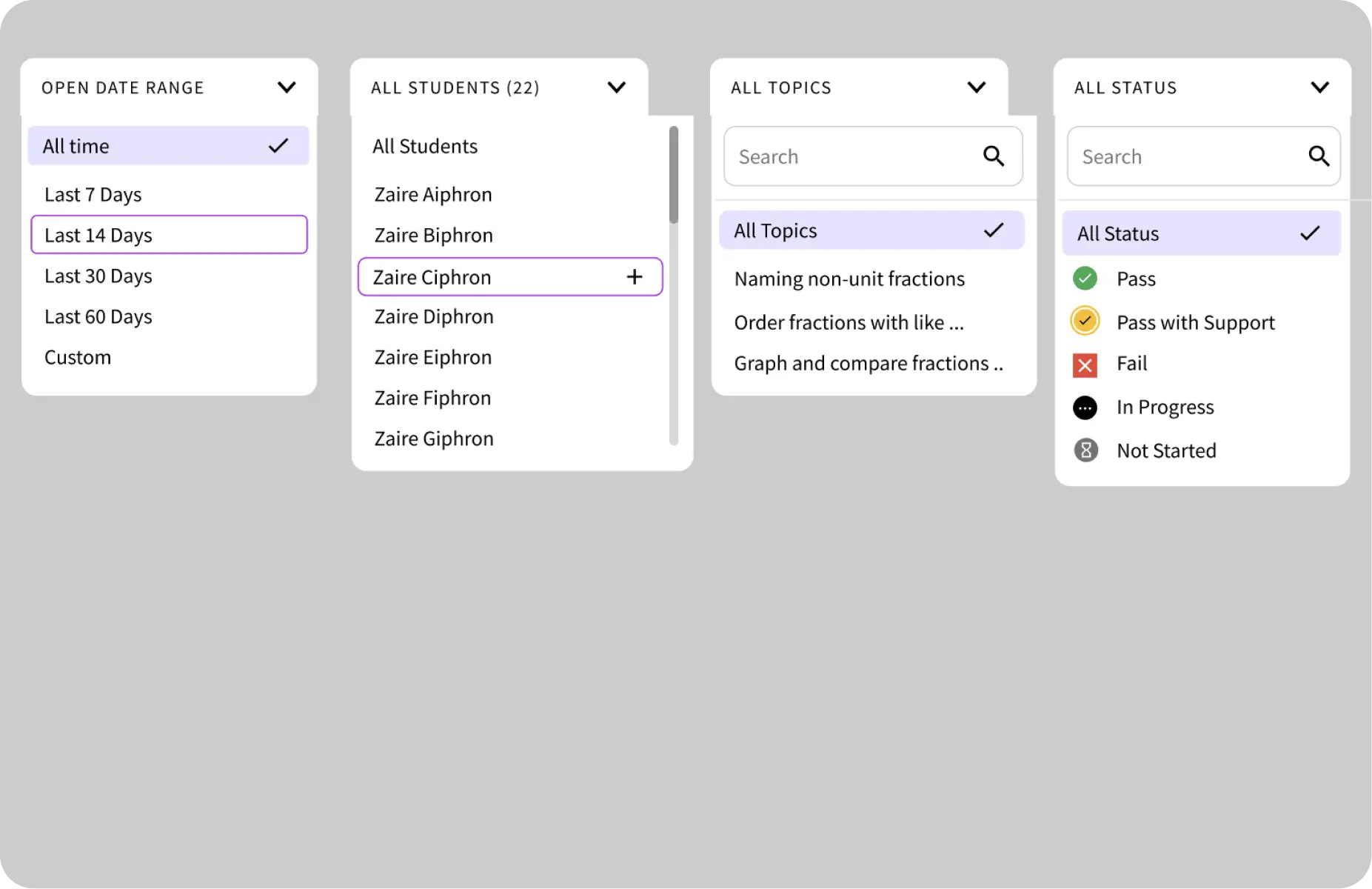
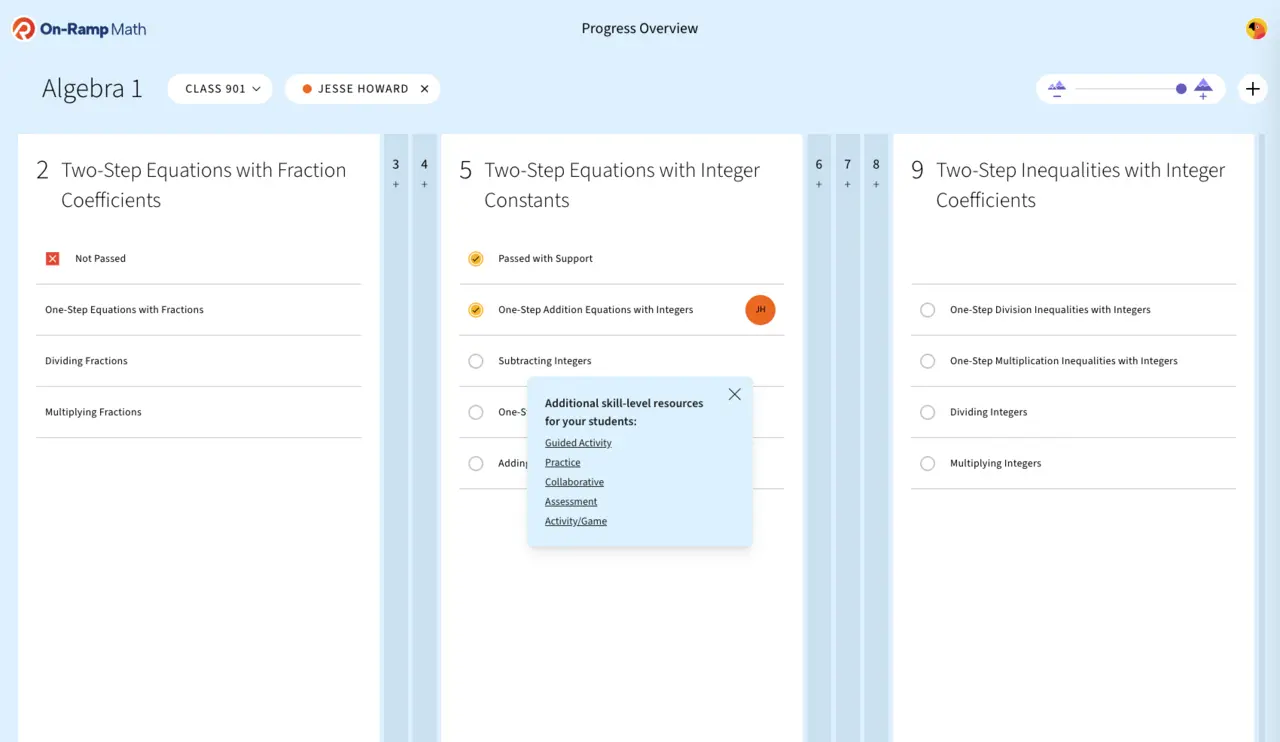
Click Image to Enlarge
Actionable Academic Intelligence
Insightful data highlights patterns and misunderstandings at the skill level, giving teachers a clearer picture of where students are struggling and why. This makes it easier to target support, plan instruction, and accelerate progress without guesswork. When additional help is needed, On-Ramp Math provides teachers with five fully aligned activities for each skill, including targeted individual and small-group resources to support direct instruction. These resources align to specific student needs and can be assigned automatically or selected by the teacher, offering flexibility while keeping support instructionally focused.
Frequently Asked Questions
- What is On-Ramp Math and who is it for?
On-Ramp Math is a 6–12 supplemental program designed to help every student become ready and able to participate in grade-level instruction. It identifies essential prerequisite skills, guides students through clear, supportive learning experiences, and gives teachers simple insight into student readiness. On-Ramp Math is ideal for classroom teachers, intervention teachers, schools, and districts seeking targeted support that strengthens foundational skills without overwhelming students or educators.
- How do students receive the right support in On-Ramp Math?
Whether students need personalized skill support, teacher-directed guidance, or foundational fluency reinforcement, On-Ramp Math provides flexible pathways that strengthen exactly what each learner needs for grade-level success.
- My Journey: Personalized Pathway for Readiness
Adapts to each student’s skill readiness, guiding them through the exact Target and Supporting Skills they need to successfully participate in grade-level instruction. - Teacher Track: Teacher-led Skill Assignment
Allows educators to assign specific skills to individuals, small groups, or the entire class, reinforcing learning or preparing students for upcoming lessons with targeted support. - Practice PowerUp: Fun, Game-Based Fluency
Strengthens foundational fluency through engaging, game-based activities that reinforce essential skills and support readiness across grade levels.
- My Journey: Personalized Pathway for Readiness
- How does the My Journey pathway personalize learning for students?
The My Journey pathway begins with an initial readiness diagnostic that identifies which Target Skills a student needs to strengthen for success in grade-level readiness. The Target Skills the student didn’t pass in the diagnostic will create their personalized learning pathway, called My Journey, of essential skills needed to make them ready and able for grade-level content. This creates a personalized pathway where students spend time only on the skills that matter most for grade-level learning.
- What happens when a teacher assigns a skill in Teacher Track?
The Teacher Track allows teachers to assign skills to individual students, small groups, or the whole class. When a teacher assigns a skill, students experience the same supportive instructional cycle used in the student’s My Journey pathway, beginning with a Concept Check, followed by guided instruction, and targeted practice with the relevant Target Skills and Supportive Skills. This ensures teachers can reinforce or revisit skills at exactly the right moment during instruction, without creating additional planning or grading work.
- How does Practice PowerUp track support foundational fluency?
Practice PowerUp, coming soon, provides fun, game-based fluency practice that strengthens essential math foundations across grade levels. These interactive activities build automaticity and confidence with key skills, helping students retain what they’ve learned and prepare for more complex concepts. Practice PowerUp can be used anytime to reinforce learning and sustain readiness.
- How does On-Ramp Math identify which skills a student needs?
On-Ramp Math breaks learning into Target Skills and Supporting Skills so students work only on what they truly need, not on unrelated remediation. Students begin the program by taking a brief diagnostic to determine which essential skills may need support in the students’ personalized learning pathway, called My Journey. At the conclusion of the diagnostic, if a student has passed a Target Skill, those Target Skills will be removed from their My Journey, while the Target Skills they didn’t pass will create their personalized learning pathway of essential skills needed to make them ready and able for grade-level content. This diagnostic creates a precise roadmap of skills the student needs in order to access grade-level content and build math comprehension and confidence.
- What types of instructional support do students receive?
Students receive support through a structured, adaptive instructional cycle that includes:
- Short instructional videos (“Let’s Watch!”)
- Facilitation Tool that guides thinking step-by-step (“Let’s Explore!”)
- Targeted practice with a similar question (“Let’s Practice!”)
- Pit Stops that check Concept readiness and adjust support
These supports combine to help students move from confusion to confidence without needing constant teacher intervention.
- How are teachers meant to use On-Ramp Math during instruction?
Teachers can use On-Ramp Math flexibly across many classroom models. The My Journey student pathway provides ongoing, personalized support for independent work, while Teacher Track allows teachers to assign Target Skills proactively or reactively—before a lesson, after a lesson, or during targeted support time.
On-Ramp Math fits naturally into centers and rotations, intervention blocks, tutoring, SPED support, before- or after-school programs, and enrichment periods. Clear dashboards help teachers quickly understand student progress and respond to needs without adding extra work.
- What makes On-Ramp Math different from other supplemental programs?
Unlike programs that diagnose broadly or push students far backward, On-Ramp Math focuses only on the essential skills needed for the student’s current grade. Its Target Skills → Supporting Skills structure pinpoints exactly what’s missing, while the instructional cycle provides meaningful, encouraging support. With clear dashboards, teacher-controlled assignments, and engaging fluency practice, On-Ramp Math strikes a balance between personalization, precision, and teacher flexibility that other tools cannot match.
- Does On-Ramp Math replace core instruction?
No. On-Ramp Math is designed to complement, not replace, core instruction. It strengthens the foundational skills students need to fully engage with grade-level lessons. Teachers remain in full control of classroom instruction, using On-Ramp Math as a targeted support system that connects directly to students’ math readiness.
- Can On-Ramp Math support multilingual learners?
Yes. On-Ramp Math’s instructional videos (available in English and Spanish), guided prompts, and scaffolded practice are designed to provide clear, step-by-step support that benefits multilingual learners. The structured, predictable cycle helps students focus on the math, while targeted fluency practice and conceptual scaffolds make learning accessible at multiple language proficiency levels.
Related Resources
If you’re interested in learning about effective math intervention strategies, check out these additional resources.

Math Strategies for Struggling Students: A New Apporach
Math is tough, especially for struggling students. Learn some strategies that can greatly improve test scores and build confidence for all students.
Read More
Effective Methods for Boosting Math Intervention in Education
Discover effective math interventions to boost engagement and learning. Explore hands-on activities and collaborative strategies for math success.
Read More
Visit Our Math Blog
Discover ideas to elevate your math instruction with classroom‑tested strategies, hands‑on activities, and engaging insights from our math experts.
Explore Now

Help Every Student Ramp Up to Grade-Level Math

Powerful Alone, Even Better Together
Hands-on science, real-world math, and critical thinking—each of our STEM programs stands strong alone and even stronger together. Build a classroom where curiosity leads and every learner thrives.